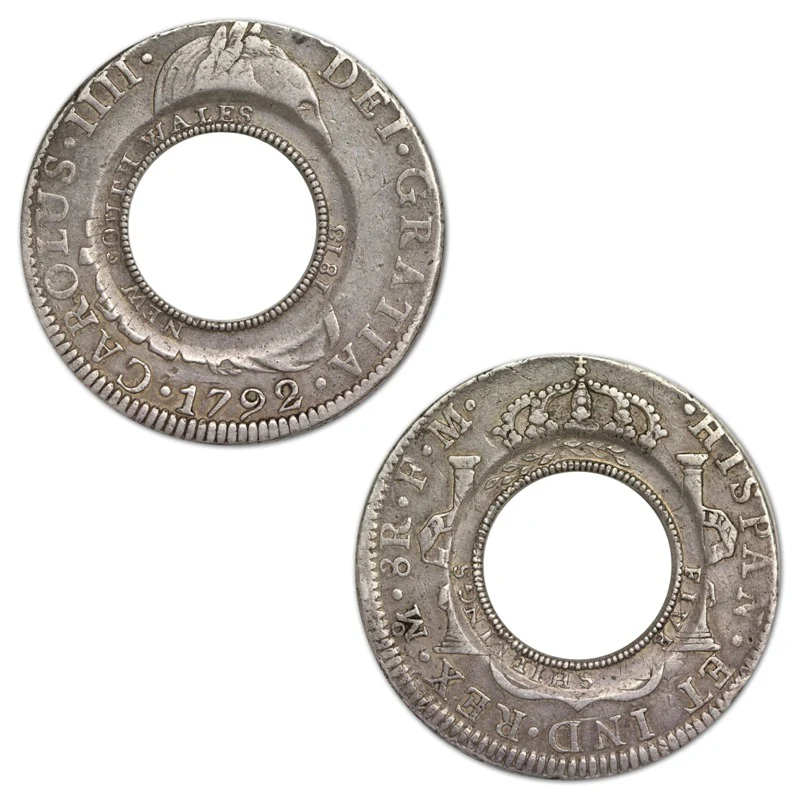

New South Wales 1813 Fifteen Pence (Dump) D/2 Fair
- Type D/2
- Recognisable date and clear crown, cleaned-Fair/Mediocre
Provenance:
- Ex: Roxbury's Auction Queensland Sale 5/5/1993, Lot#2524 @$400.00
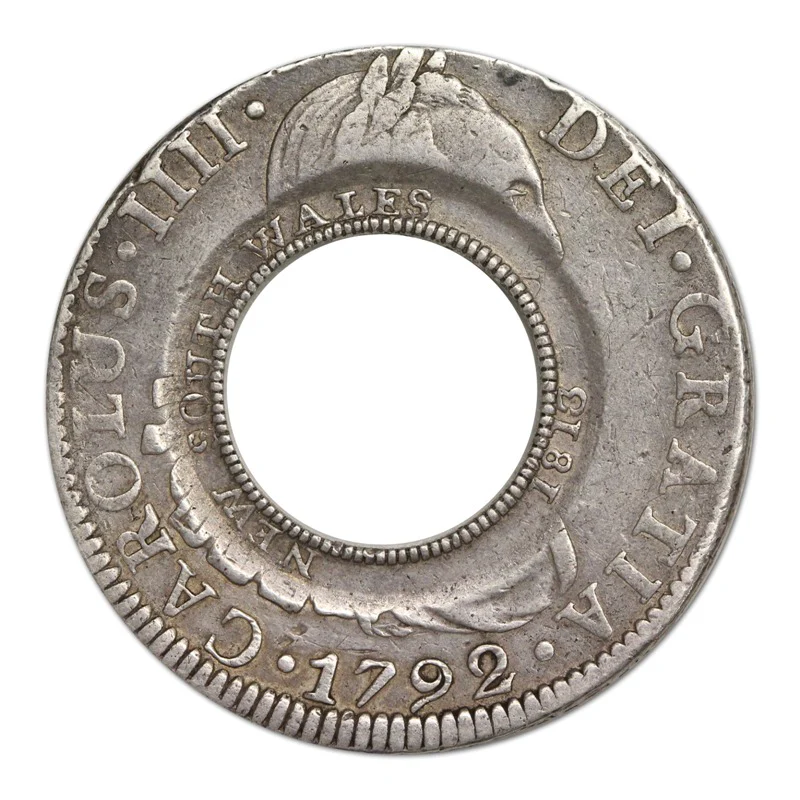
Governor Lachlan Macquarie gave the task of re-minting 40 000 Spanish/ American Silver Dollars to convicted forger William Henshall. Henshall had worked as a metal plater in England. On an 1811 New South Wales muster list he was listed simply as a 'convict' without reference to his trade. Macquarie probably learnt about Henshall's metal-working skills by reputation. Of the original mintage of 39,910 that were struck approximately 1000 examples are known to exist today worldwide making the "Dumps" the most historically significant Australian coin which was cut out of the Holey Dollar.
The obverse features 'New South Wales 1813' and a crown in the centre. The reverse depicts the words 'Fifteen Pence' in two lines. There were four different types struck; A/1 D/2 C/4 and E/3. The C/4 and E/3 types are very rare with only 1% of the surviving pieces being identified as the E/3 type.
Product Information
Product Information
Shipping & Returns
Shipping & Returns
Description
- Type D/2
- Recognisable date and clear crown, cleaned-Fair/Mediocre
Provenance:
- Ex: Roxbury's Auction Queensland Sale 5/5/1993, Lot#2524 @$400.00
Governor Lachlan Macquarie gave the task of re-minting 40 000 Spanish/ American Silver Dollars to convicted forger William Henshall. Henshall had worked as a metal plater in England. On an 1811 New South Wales muster list he was listed simply as a 'convict' without reference to his trade. Macquarie probably learnt about Henshall's metal-working skills by reputation. Of the original mintage of 39,910 that were struck approximately 1000 examples are known to exist today worldwide making the "Dumps" the most historically significant Australian coin which was cut out of the Holey Dollar.
The obverse features 'New South Wales 1813' and a crown in the centre. The reverse depicts the words 'Fifteen Pence' in two lines. There were four different types struck; A/1 D/2 C/4 and E/3. The C/4 and E/3 types are very rare with only 1% of the surviving pieces being identified as the E/3 type.